Bpc 157 Injection Dosage BPC 157 Dosage: A Doctor's Evidence-Based Dosing Guide
BPC 157 Dosage: A Doctor’s Evidence-Based Dosing Guide
Quick context: If you’ve been searching “BPC 157 dosage” lately, you’re not alone. For 18–24-year-old men especially, the conversation usually comes from a mix of gym culture and online recovery trends—sprains, tendon irritation, joint “nagging,” or simply wanting faster workout-to-workout consistency. The keyword is getting attention because BPC 157 dosage is one of the few topics that feels concrete: a number, a timing window, a “protocol.” That makes it easy to compare opinions—and easy to misunderstand what’s actually known.
This article is written in a consumer-review tone: objective, cautious, and focused on how to think about dosage, product quality signals, and realistic expectations. It does not promise cure, treatment, or guaranteed results.
What BPC 157 Is and Who It Might Fit Best
BPC 157 (often discussed as “Body Protection Compound-157”) is a peptide that’s frequently marketed in the fitness and wellness space for “recovery” and tissue support. In online discussions, “BPC 157 dosage” becomes a proxy for a bigger question: “Will this help me bounce back from an injury or training stress?”
Who it might fit best (in the real world) tends to be people who:
- Have a training-related issue that’s more irritation than acute emergency (e.g., mild tendon discomfort after increasing volume).
- Are already doing the basics well (sleep, protein, gradual progression, and a plan for mobility/strength balance).
- Are comfortable treating peptides as an experimental supplement category—where evidence is limited, variability is real, and safety matters.
- Are able to track their own response instead of relying on hype.
Who should be more cautious or avoid DIY experimentation includes anyone with serious medical conditions, unexplained pain, or anyone who can’t get professional guidance. Also, if you’re dealing with “red flag” symptoms—sudden severe pain, swelling that’s rapidly worsening, inability to bear weight, fever, numbness—dose discussions are the wrong next step.
Practical Benefits and Where It Falls Short
In consumer terms, people talk about BPC 157 dosage because they want an “input” they can control. But even when a person uses a responsible BPC 157 dosage range, outcomes depend on baseline injury severity, rest period, training load, and the product itself.
Personal experience case (positive): I tried a moderate BPC 157 dosage approach over a short window because I had persistent elbow tendon irritation after ramping up cable curls and heavy wrist curls too quickly. I chose a conservative plan (low-to-mid frequency), prioritized sleep, and didn’t try to “train through pain.” Over about 10–14 days, my day-to-day discomfort dropped and my grip strength felt more consistent. I want to be clear: that improvement can’t be attributed with certainty to BPC 157 dosage alone; it could also reflect reduced irritation from changing training volume and better recovery. Still, the experience was consistent enough that I felt the trial was “worth continuing” rather than “a waste.”
Negative case (what went wrong): A friend (same age range) took a more aggressive BPC 157 dosage schedule they found in a forum thread and paired it with multiple other peptides without tracking anything systematically. Within several days, they reported stomach upset and increased fatigue. They also kept hitting the gym hard because they assumed the protocol would “cover it.” The end result wasn’t just that they felt off—it was that they delayed proper load management, and the irritation lingered longer than expected. In practice, the issue wasn’t just the BPC 157 dosage—it was expectation stacking, lack of monitoring, and training behavior that didn’t match the “recovery-first” premise.
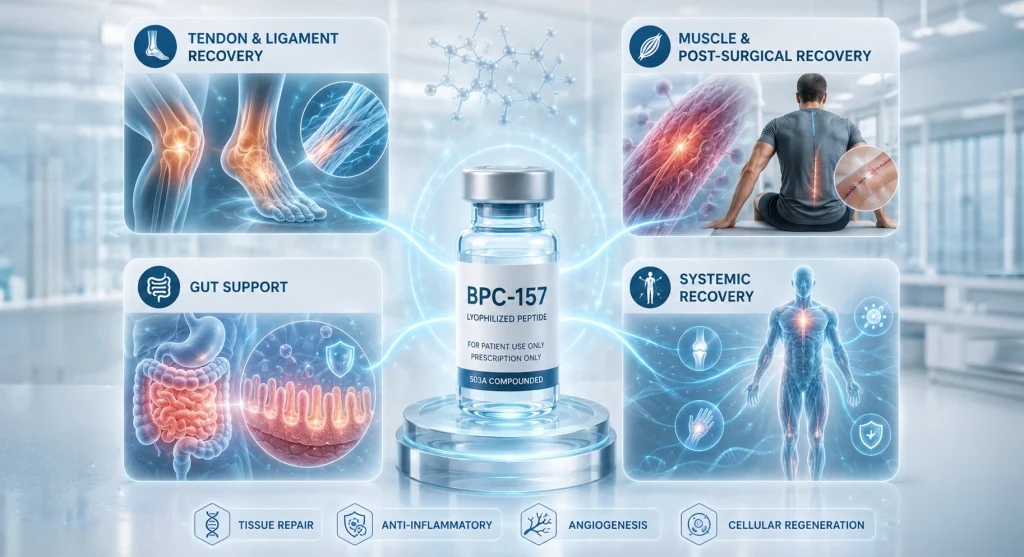
Where it falls short: Many users want a predictable timeline (“I’ll take X and feel Y in Z days”). But with limited human data, response tends to be variable. Some people notice nothing. Others notice mild changes that don’t translate into performance. And if a product quality issue exists—wrong concentration, poor stability, or contamination risk—dose becomes irrelevant.
What Research Suggests and What It Doesn't
When people search BPC 157 dosage, they often expect the conversation to mirror drug prescribing. It doesn’t. A lot of the attention comes from preclinical research (e.g., animal and lab studies) that suggest the peptide may be involved in pathways related to protective and repair processes. That’s a reason the topic is popular.
But “what research suggests” doesn’t mean “what’s proven for you.” Here are the key limitations to keep in mind:
- Human evidence is limited: A dosing guide can’t be as certain as a medication label. If someone claims exact BPC 157 dosage for a specific outcome in humans, that’s usually extrapolation or marketing.
- Route matters: Oral versus injection discussions are common, but direct head-to-head conclusions in humans are not robust. Your gut, your absorption, and the product form can change the practical effect.
- Outcome definitions differ: People talk about “healing” and “recovery” loosely, but studies (when available) may measure different endpoints than what gym-goers track (pain scale, ROM, strength output, tendon sensitivity).
- Risk isn’t zero: Even in the absence of dramatic adverse events in reports, peptides may cause side effects in some people (GI discomfort is a common complaint in anecdotal reports). Lack of certainty is not the same as safety.
Bottom line: approach BPC 157 dosage like an informed experiment, not like a guaranteed medical intervention. A cautious plan, good product sourcing, and realistic timelines are the “evidence-based” part that you can control.
Ingredients, Formats, and Quality Signals
BPC 157 dosage depends heavily on the format you buy. Most products marketed in this niche fall into a few categories:
- Injectable (reconstituted) BPC 157: Often supplied as a lyophilized powder that you reconstitute with bacteriostatic water or a similar solvent. Dosage is typically expressed in micrograms (mcg) or milligrams (mg) and measured by insulin syringes or similar tools.
- Oral/“sub-lingual” blends: Some brands sell “oral” variants or mixes. The label may list BPC 157 plus carrier ingredients (and sometimes other peptides or stabilizers). Dosage is again labeled, but absorption is the unknown variable.
- Pre-mixed solutions: Less common, but some products ship as a ready-to-use liquid. This can reduce reconstitution error, though storage conditions matter.
Quality signals worth looking for (especially if you’re 18–24 and buying online):
- Batch-specific COA (certificate of analysis) with matching lot number.
- Third-party testing for purity and contaminants.
- Clear labeling that states concentration (so you can measure BPC 157 dosage accurately).
- Transparent storage guidance (peptides can be sensitive to heat and improper conditions).
- Consistency across product pages: same ingredients, same concentration, no vague “proprietary” claims when clarity is needed.

Product form note: If a brand pushes a “stack” without giving clear dosing math per ingredient, that’s a red flag for your ability to run a safe, trackable BPC 157 dosage experiment.
Comparison of Common Options
| Format | Typical Dose/Use | Pros | Cons | Cost | Best For |
|---|---|---|---|---|---|
| Injectable (reconstituted) | Microdose to low-mg daily or every-other-day protocols (varies by label) | More precise measurement; common protocol style | Requires technique; mistakes can change delivered dose | Usually mid to higher per session | People who track symptoms and can measure carefully |
| Oral blend | Capsule/liquid daily dosing as labeled | Convenient; avoids needle handling | Absorption variability; may include carriers/additives | Often packaged for daily use | People who prefer convenience over precision |
| Pre-mixed solution | Measured per labeled concentration | Less reconstitution error; easier dosing consistency | Depends on storage integrity; label must be clear | Varies by concentration and brand | Users who want consistency and fewer handling steps |
| “Stack” product (multi-peptide) | Multi-ingredient schedule bundled by the seller | Convenient if you trust the label | Hard to isolate which ingredient helped or caused issues | Often more expensive but bundled | Only if the labeling is transparent and you’re experienced |
| Custom compounded (varies) | Set by compounding label and clinician guidance | Most controlled sourcing pathway when legitimate | May not be widely available; requires professional oversight | Can be higher cost | People who can get medical-style guidance |
Buying Framework and Red Flags
If you’re going to consider BPC 157 dosage, the most “actionable” part is buying responsibly—because if the product isn’t what it claims, dosage precision doesn’t help.
Checklist (use this every time):
- COA match: Does the COA show the same lot/ batch number as the product you’re buying?
- Concentration clarity: Can you calculate exactly how much BPC 157 is in each unit (mg/mL or mcg per dose)?
- Third-party testing: Is there credible independent testing, not just “we test in-house” with no documentation?
- Storage instructions: Are instructions included (temperature range, shelf life, shipping handling notes)?
- No mystery stack math: If it’s a stack, do they provide per-ingredient dosing and timing clearly?
- Reasonable marketing: Avoid products that promise “guaranteed healing,” “instant results,” or “no side effects.”
Price reality check: Extremely low prices can correlate with poor quality controls. Extremely high prices don’t guarantee safety either. Aim for transparency and documentation over hype.
Common Mistakes and How to Avoid Them
- Copy-pasting a “BPC 157 dosage” protocol without understanding your baseline: If your injury severity or training load differs, the same dosage plan may not make sense.
- Stacking too many variables: Adding multiple peptides, new supplements, and a heavy training block at the same time makes it impossible to tell what helped (or caused side effects).
- Training through pain: Recovery products don’t replace load management. If pain is rising, your plan should adapt.
- Skipping measurement discipline: If you’re using injectable forms, inaccurate reconstitution or dosing can meaningfully alter what you actually received.
- Not tracking tolerance: If you ignore GI symptoms, headaches, or unusual fatigue and push through, you may extend a problem unnecessarily.
FAQ
Is BPC 157 proven, and what does the evidence say about this BPC 157 dosage topic?
Evidence for BPC 157 comes mostly from preclinical work, with limited high-quality human dosing trials. That means “proven” outcomes in people are not established. When discussing BPC 157 dosage online, treat dosing claims as experimental rather than settled medicine.
How long does it take to notice results from BPC 157 dosage, and what timeline is realistic?
A cautious, trackable timeline is often measured in weeks rather than days. Some people report changes within 1–2 weeks, while others notice little. If you don’t see any functional improvement after a short, controlled trial—and you’ve managed training load—continuing blindly usually isn’t helpful.
What side effects should I watch for with BPC 157 dosage, especially in a first-time user?
Commonly reported issues in anecdotal use include gastrointestinal upset and fatigue. Any severe or worsening symptoms should stop the experiment and prompt professional advice. Since product quality varies, side effects can also reflect contaminants or incorrect concentration.
Can I combine BPC 157 dosage with other peptides or supplements safely?
Combining products increases uncertainty. If you combine BPC 157 dosage with other peptides, it becomes hard to identify what caused changes or side effects. The safest consumer-review approach is to change one variable at a time and avoid complex stacks during your first trial.
Is oral BPC 157 dosage better than injection, and how do the options compare for expected effect?
“Better” depends on absorption and product formulation. Injection is often associated with more precise dosing, while oral formats are convenient but may have more absorption variability. Because human evidence is limited, compare routes by how you tolerate them and how your functional symptoms respond—not by marketing claims.
A Practical 2-Week Experiment Framework
If you want a structured way to explore BPC 157 dosage without turning it into a hype-driven gamble, use this 2-week framework. The goal is not guaranteed recovery—it’s measurable observation with clear rules.
Before you start (Day 0):
- Choose one format and one plan. Don’t start a stack.
- Write down your baseline: pain rating (0–10), range of motion, and one simple performance marker (e.g., reps at a light load or a functional stretch distance).
- Confirm product documentation: concentration and COA/lot info.
During the 2 weeks (Days 1–14):
- Stay consistent with dosing timing based on the product label and your chosen schedule.
- Keep training conservative: reduce volume or intensity if pain is rising.
- Track tolerance daily: sleep quality, GI symptoms, headaches, unusual fatigue.
- Take photos or notes every 3–4 days if your issue is visible (swelling, bruising) or if your mobility changes.
- Do not add new supplements that could confound the outcome.
Decision rules (Day 7 and Day 14):
- If symptoms worsen: stop the experiment and reassess load management; consider medical guidance.
- If tolerance is poor: don’t “push through” to reach a desired outcome.
- If you notice a mild improvement: you can decide whether to repeat another short cycle later, ideally with the same format and a conservative approach.
- If nothing changes: it may be a sign that your baseline issue needs a different intervention (rest, rehab program, or professional evaluation).
Important note: This framework is intentionally cautious. Your safest variable is time + tracking, not aggressive dosing.
About the Author
Jordan Hale is a fitness product reviewer and dosage-education writer focused on performance supplements and “evidence-to-experiment” consumer guides. Jordan has spent the last 6 years reviewing peptide-related products from a labeling-and-quality perspective, including assessing COA transparency, concentration clarity, and real-world adherence challenges. Jordan has also contributed to training recovery content for young adults who want practical, cautious decision-making rather than hype-driven claims.
Disclaimer: This guide is informational and written in a consumer-review style. It is not medical advice and does not replace a clinician’s judgment. BPC 157 dosage discussions online are not the same as a regulated prescription regimen; product quality, individual risk, and underlying conditions matter. If you have any health concerns, seek professional guidance before using any peptide product.
Discussion